







Solid Wood, European Oak & American Walnut
Bruunmunch is a Danish furniture brand that designs and manufactures solid wood furniture in Denmark, using only two species of timber: European oak (Quercus robur) and American walnut (Juglans nigra). We work exclusively with solid wood and 100% natural materials, because we believe the finest dining tables and furniture are built from wood that can be sanded, re-oiled and renewed for generations.
We consider these two hardwoods the finest available for furniture making, and they have earned that reputation over centuries. European oak is prized for its density, natural durability and warm, golden Nordic glow; American walnut for its exceptional stability and a deep, chocolate-brown colour that comes entirely from nature, nothing stained, nothing tinted. Both are slow-grown: an oak stands in the forest for 120–180 years before it is ready for furniture production, a walnut for 60–80 years or more. Every plank we use is FSC®-certified, traceable to responsibly managed forests where felling never exceeds what the forest naturally regrows.
The story of a Bruunmunch table therefore begins long before our cabinetmakers in Denmark ever touch it, in a French or Central European oak forest, or in the hardwood valleys of the American Midwest, decades or more than a century ago. This page tells that story, from forest to finished furniture: where the wood grows, how long it takes, how it is harvested responsibly, and why oak and walnut remain the benchmark for solid wood furniture.

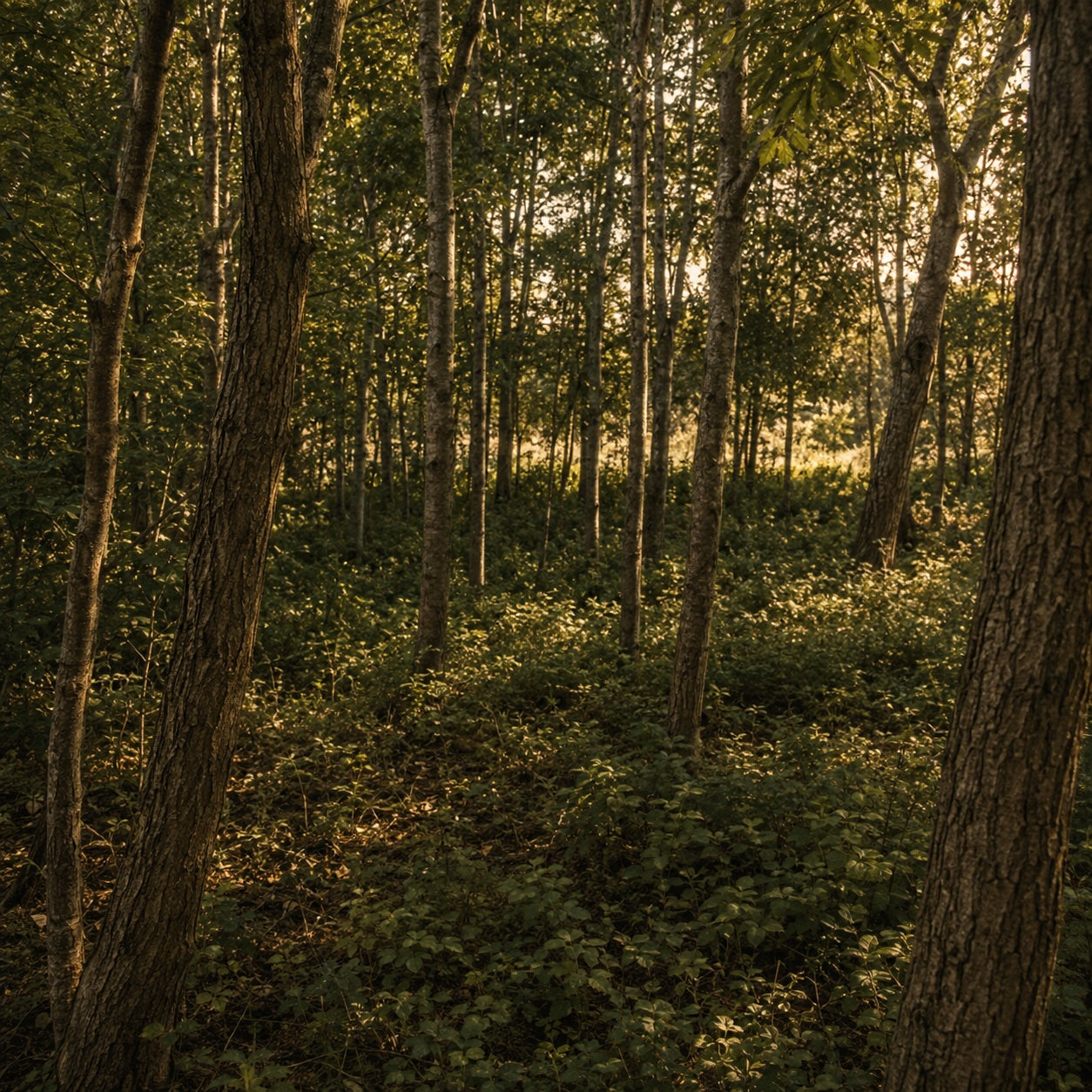
From Forest to Felling, Where Our Wood Grows, and How Long It Takes
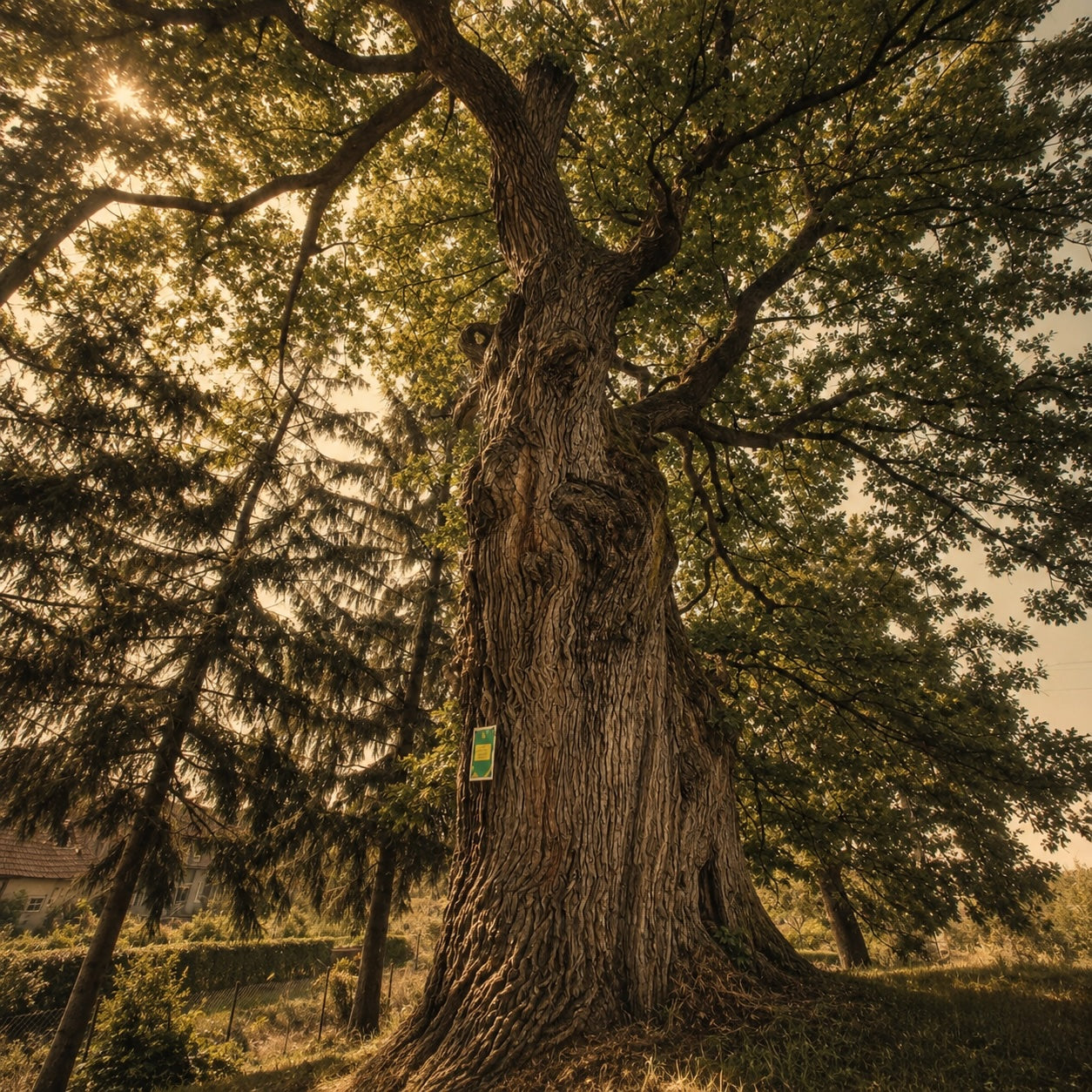
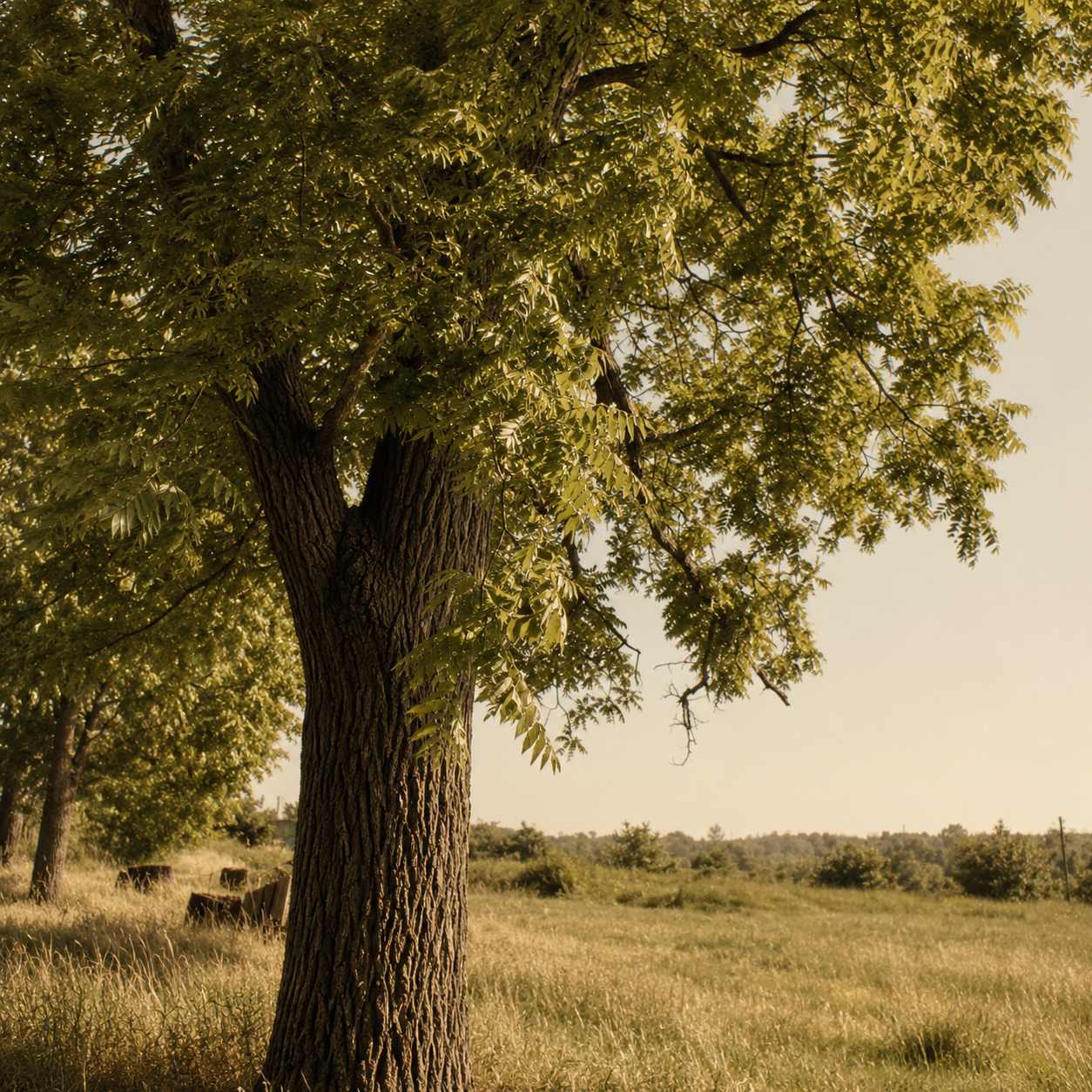
The story of every Bruunmunch table begins in one of two forests, an ocean apart. European oak (Quercus robur and Quercus petraea) grows across the temperate forests of Europe, from France and Germany through Central Europe to Denmark and the rest of Scandinavia. France alone holds more than five million hectares of oak forest, making oak the most widespread hardwood on the continent. American walnut (Juglans nigra, black walnut) grows in the mixed hardwood forests of the eastern and central United States, with its heartland in the fertile river valleys of Ohio, Indiana, Missouri and Kentucky. Where oak defines whole European landscapes, walnut is a demanding and naturally scarce tree that grows best in deep, well-drained soil and rarely in large, uniform stands, one reason it has always ranked among the world's most exclusive furniture woods.
Neither tree can be hurried. The oak thrives in mineral-rich soil and a cool, moist climate, growing often less than half a metre a year, yet reaching up to 40 metres with a straight trunk up to a metre in diameter. That slow northern growth is exactly what creates its tight annual rings and dense, closed structure, and it means an oak is typically 120–180 years old before it is mature enough to be felled for furniture production. The oak in a Bruunmunch table began growing in the middle of the 19th century, planted and tended by foresters who knew they would never see it harvested. Walnut grows somewhat faster, stretching toward the light to 30–40 metres and developing a long, straight trunk, but still needs 60–80 years, often more for the finest logs, before the heartwood carries the depth of colour and dimension that furniture making demands.
When a tree of that age is finally felled, it happens on the forest's terms. We exclusively use FSC®-certified wood: every plank is traceable back to a responsibly managed forest through an unbroken, audited chain of custody, from forest to our workshop in Denmark. In an FSC-certified forest, mature trees are harvested selectively, individually, never by clear-cutting, so the forest remains a living, continuous ecosystem. For every tree taken out, the forest is regenerated, and harvesting never exceeds what the forest can naturally reproduce; wildlife habitats, water quality and the rights of forest workers are all part of the certification. For us, this is not a marketing point but the precondition for working with a material that takes over a century to grow. A 150-year-old oak deserves a forestry culture that thinks 150 years ahead, and this is the real meaning of "slow furniture": the material is measured in generations, and the furniture should be built to last just as long.
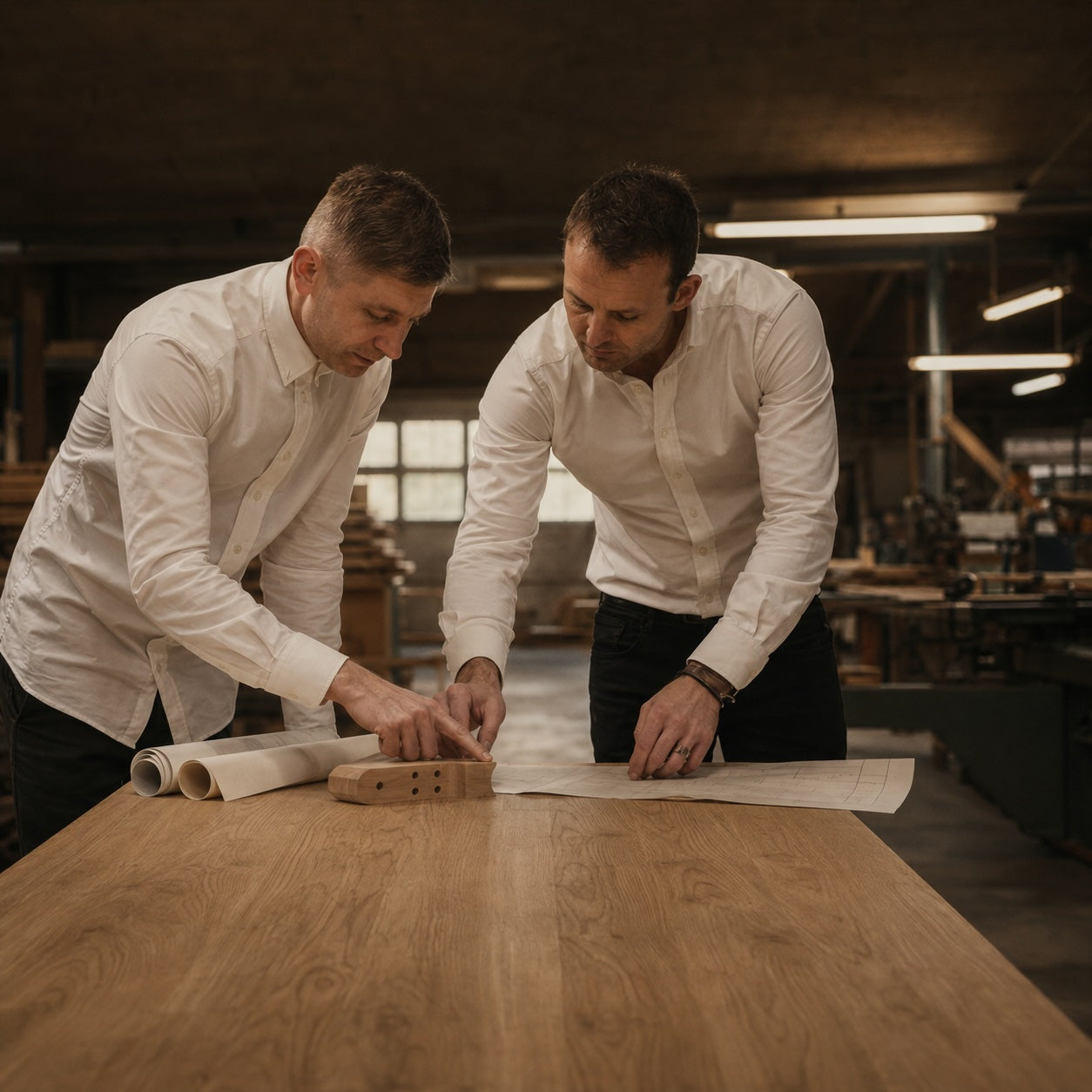
Crafted in Denmark, Why Oak and Walnut Are the Finest Furniture Woods
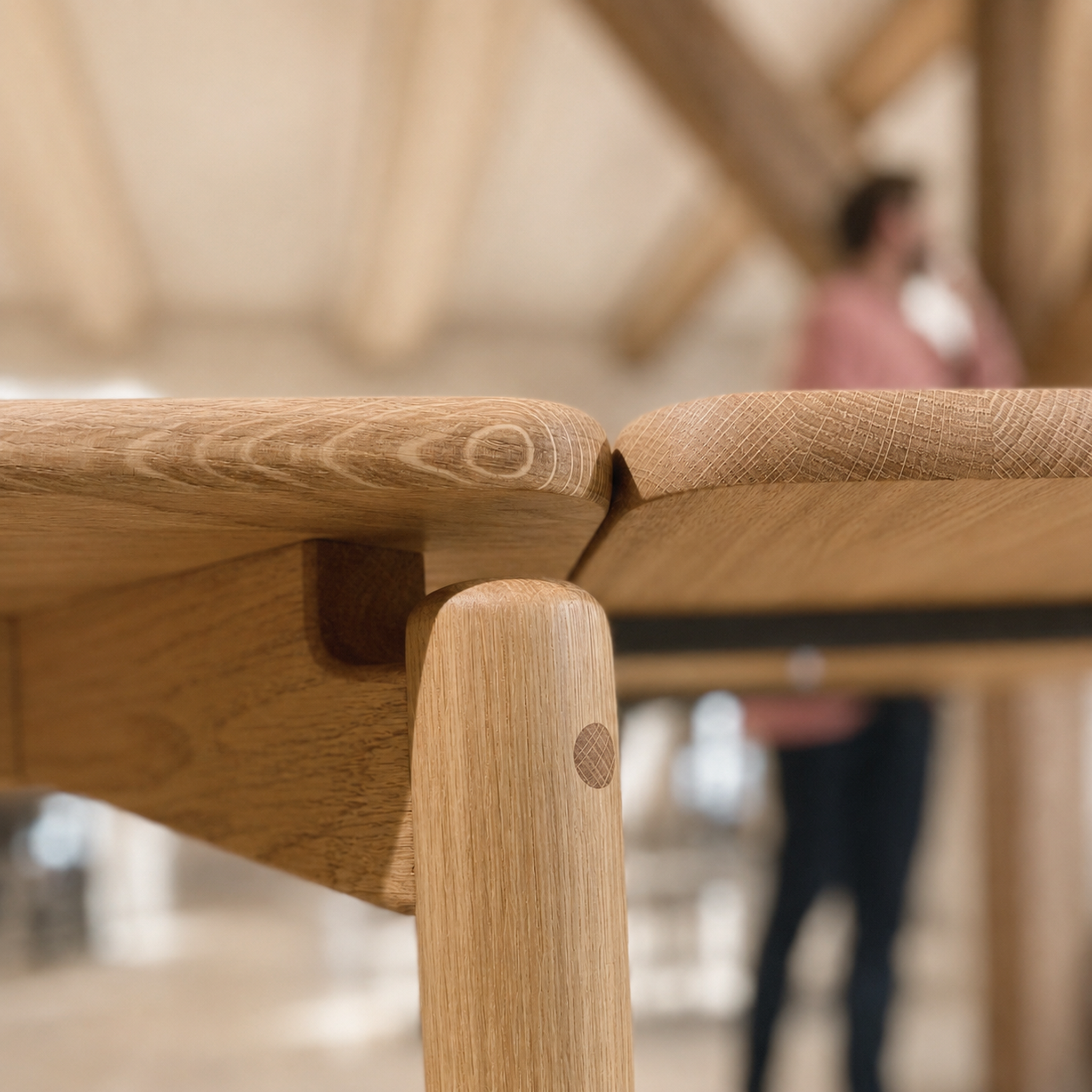
All Bruunmunch solid wood furniture is made in Denmark, at our carefully chosen woodworking manufacturer a stone's throw from our hometown, old factory buildings filled with the scent of wood and generations of Danish cabinetmaking tradition. Here the sawn planks are dried, selected and matched by hand: grain, colour and character are assessed plank by plank, so every tabletop appears calm and harmonious, and joints are executed with such precision that on our extendable tables they are nearly invisible, even with the table fully extended. Finally, the wood is finished with oil, including our own oil, developed specifically for our tables. Once the surface is saturated, the oil forms a protective barrier against everyday life, and because the wood is solid all the way through, a Bruunmunch table can be sanded and re-oiled to stand as new, not once, but again and again, for generations.
That craftsmanship deserves the finest raw material, and there is a reason we work with exactly these two species. European oak has been the backbone of European furniture making, shipbuilding and architecture for centuries: its slow growth produces a dense, hard wood with high natural durability, its tannins give it built-in resistance to wear and rot, and its closed structure makes it almost impossible for water to penetrate. It is a wood that improves with use. American walnut is prized for a different set of virtues, exceptional dimensional stability, a fine, even texture that machines and finishes beautifully, and above all its colour. Walnut is one of very few woods in the world whose deep, dark tone comes entirely from nature; nothing is stained or tinted, the colour you see is the tree itself. Together, the two species cover the full spectrum of what solid wood furniture can be: oak for its strength, glow and Nordic calm, walnut for its depth, warmth and quiet exclusivity.
The Character and Expression of Each Wood
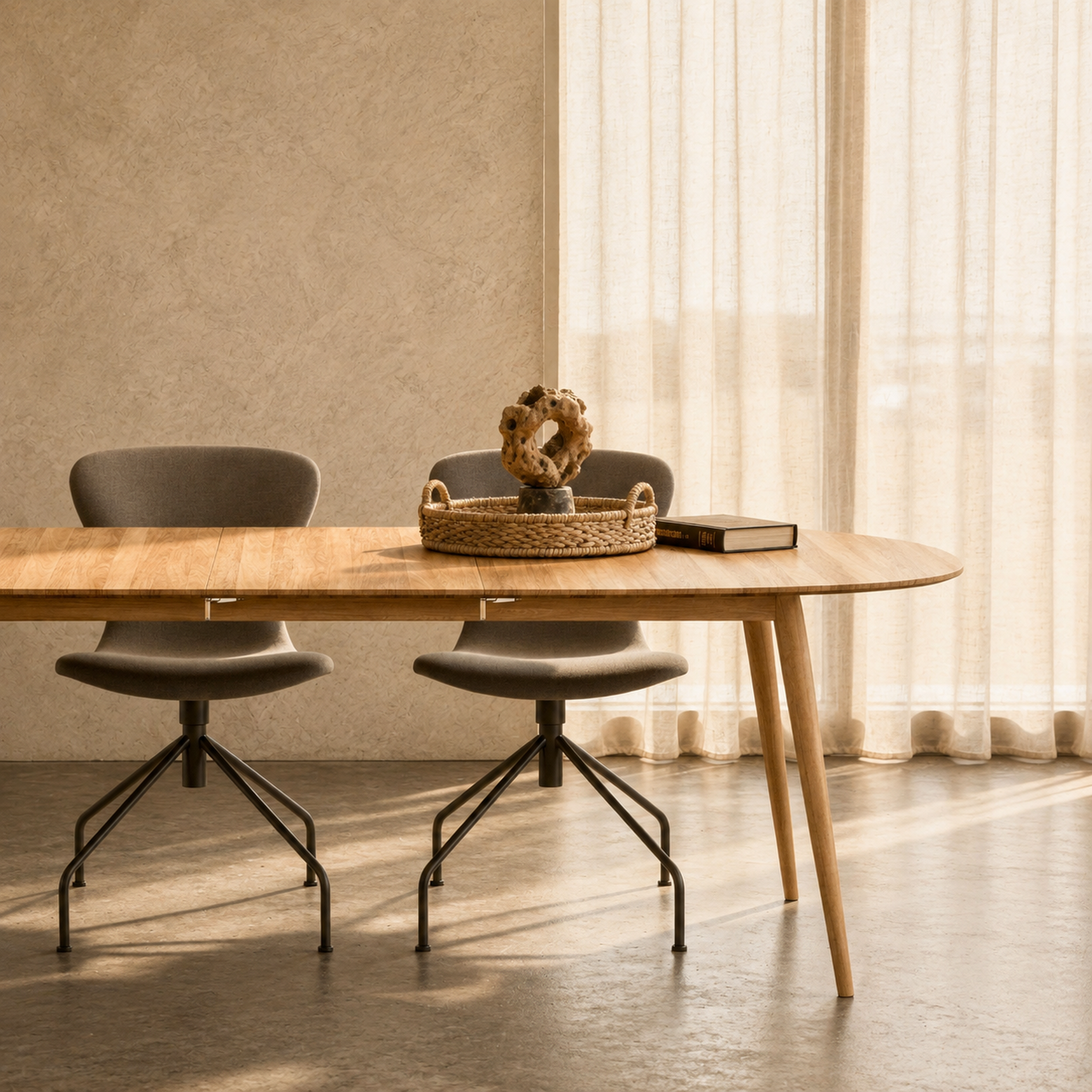
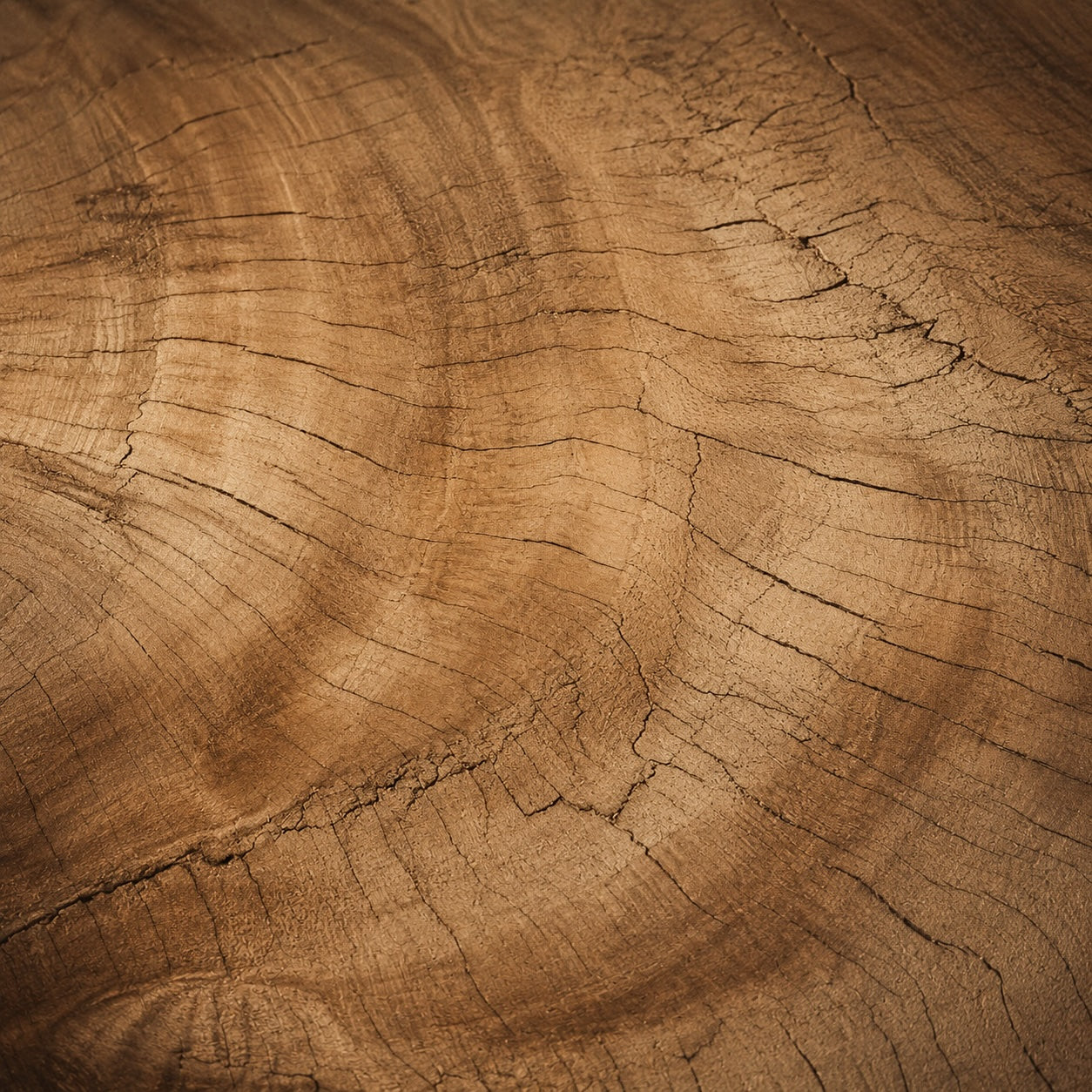
European oak possesses a beautiful, warm colour palette, from light golden to honey tones, with a distinctive glow that adds unique shades to its expression. Its grain is lively and open, with the characteristic rays and figuring that make every plank one of a kind. We offer our oak in four expressions:
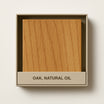
- Oak, natural oil, enhances the wood's warm glow and classic Nordic character.
- Oak, white oil, a light, Japanese-inspired calm expression.
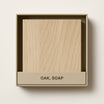
- Oak, soap, the classic Scandinavian treatment, preserving the oak at its palest and most natural, with a soft, matte surface.
- Oak, smoked, a deep, dark tone that pairs beautifully with concrete and the new Nordic style.
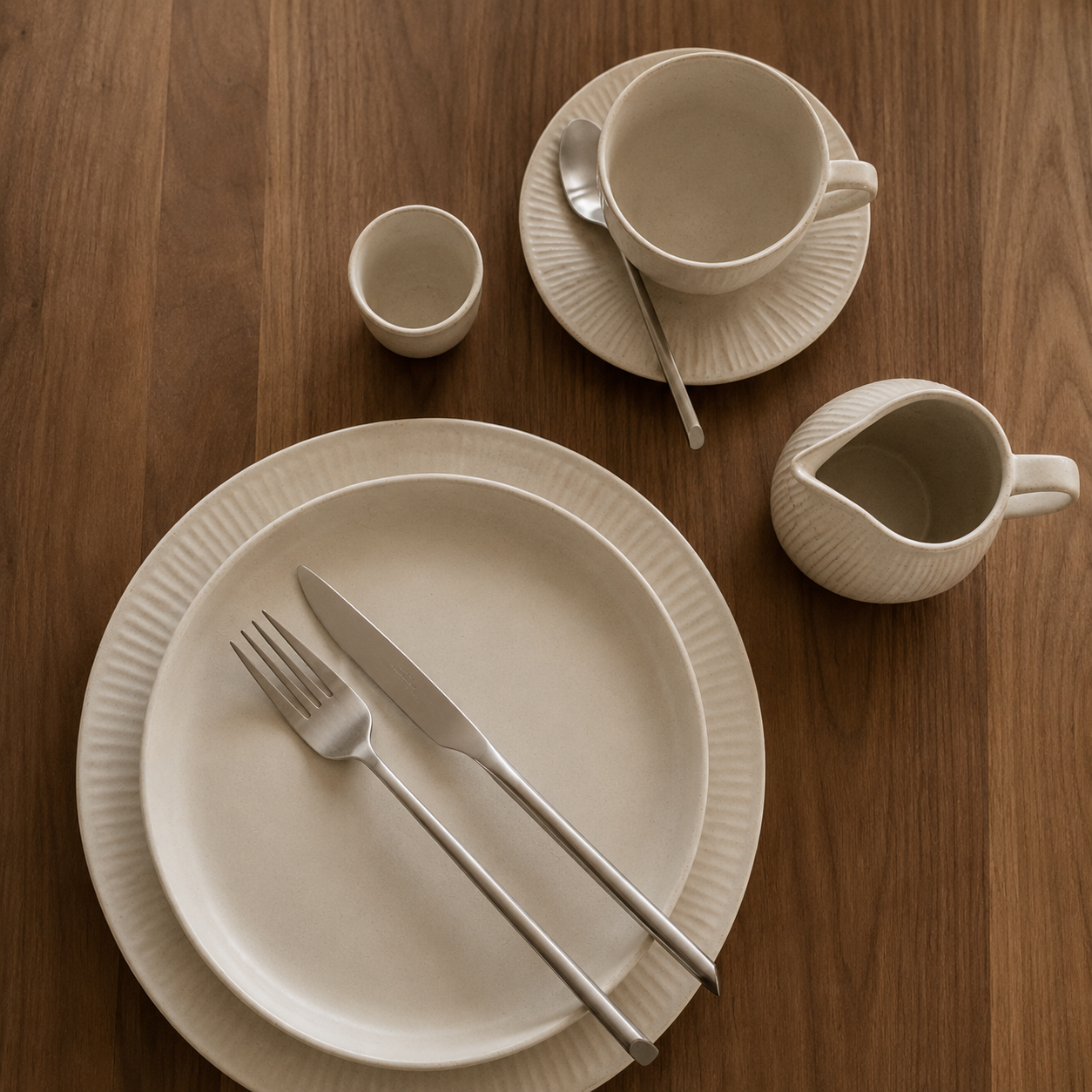
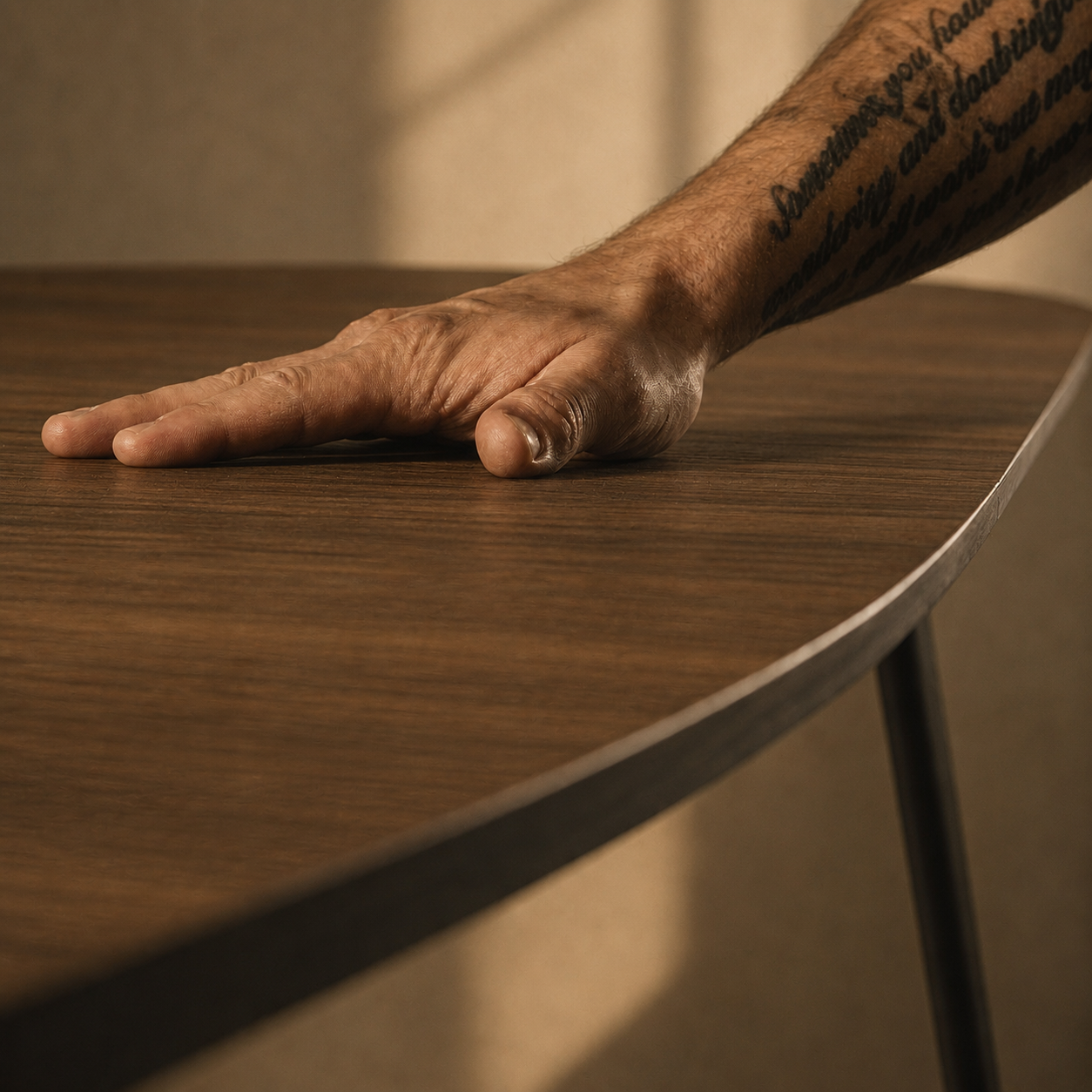
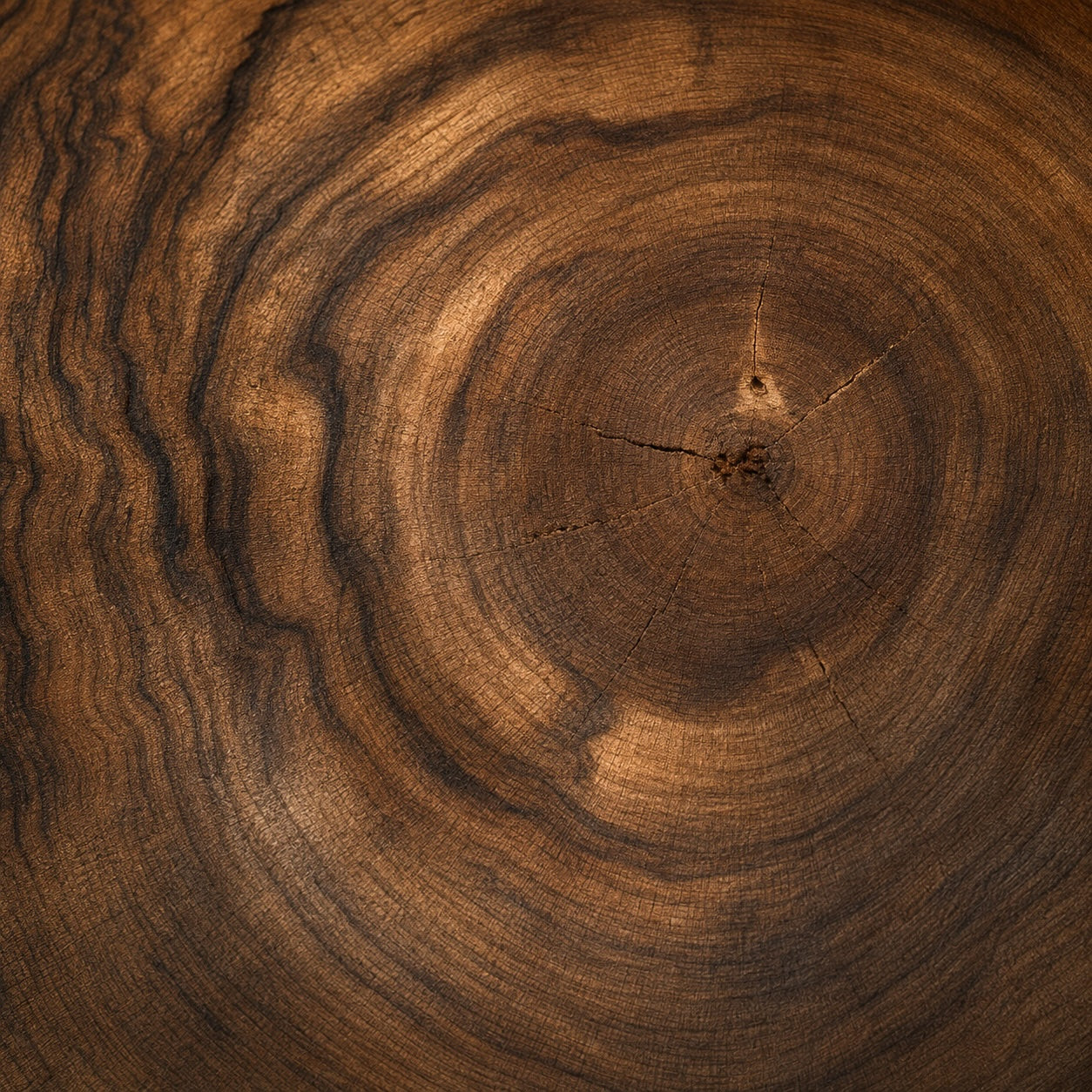
American walnut is our most exclusive surface. The heartwood spans deep chocolate brown with subtle violet and golden undertones, framed by lighter sapwood, and the grain flows in long, elegant lines with occasional waves. We offer walnut in one expression:
- Walnut, oiled, the oil deepens the wood's beautiful grain pattern and natural expression, because a wood this refined needs nothing added.
The two woods also age in opposite directions, which is part of their charm: oak deepens and grows warmer with light and time, while walnut softens into lighter, golden-brown tones. A solid wood table doesn't just endure the years — it records them.